
Dental Sealants
What Are Dental Sealants?
Dental sealants are thin, protective coatings placed on the chewing surfaces of back teeth (molars). They fill in the deep grooves where food and bacteria easily get trapped — helping prevent cavities before they start. Sealants are safe, painless, and highly effective for protecting childhood smiles.
Why Are Sealants Important?
Children’s molars have natural pits and grooves that are hard to clean, even with good brushing. Sealants act as a shield to:
· Prevent cavities
· Reduce the need for fillings in the future
· Protect the enamel while teeth are developing
Studies show that sealants can reduce the risk of cavities in molars by up to 80%.
Who Should Get Sealants?
Sealants are recommended for:
· 1st permanent molars (usually erupt around age 6)
· 2nd permanent molars (around age 12)
· Some children with deep grooves in their baby molars may also benefit
Your dentist will let you know when your child’s teeth are ready.
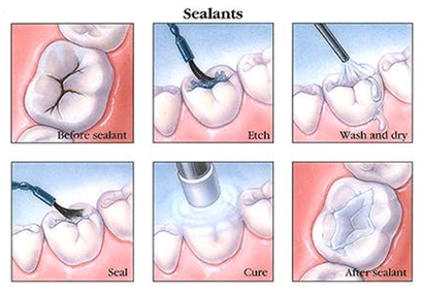
How Are Sealants Applied?
The process is quick and comfortable:
1. Clean the tooth
2. Prepare the surface with a gentle conditioning gel
3. Brush on the sealant material
4. Harden it with a special blue curing light
No shots, drilling, or discomfort — most children don’t even realize it’s being done.
How Long Do Sealants Last?
Sealants can last several years, but regular checkups help ensure they stay in good condition. If a sealant chips or wears down, it can be easily repaired.
Caring for Sealants
After sealants are placed:
· Your child can eat and drink right away
· Keep brushing and flossing daily
· Attend regular dental checkups so we can monitor the sealants
Sealants work best when paired with good home care.
Are Sealants Safe?
Yes. Sealants have been used for decades and are recommended by:
· The American Dental Association (ADA)
· The American Academy of Pediatric Dentistry (AAPD)
They are a trusted and effective way to prevent cavities.
When to Call Us
Please reach out if you notice:
· A sealant looks chipped
· Your child reports something feeling “rough” in their bite
· You have questions about when your child is ready for sealants